
My Child Broke a Tooth — What Should I Do? A Parent’s Guide by Dr. Birva Patel

Dental Teeth Guard Bodakdev – Where to Get a Custom Teeth Guard in Bodakdev, Ahmedabad
May 27, 2026
Children’s Hospital Dental: Why Specialized Dental Care Matters for Every Child
July 28, 2026The Moment Every Parent Dreads
Your child is playing, falls, and you see it — a chipped or broken tooth. Your heart drops. You don’t know whether to rush to a hospital, call a dentist, or wait and see.
This guide will walk you through exactly what to do, step by step, so you can stay calm and get your child the right care quickly.
Is a Broken Tooth in a Child a Dental Emergency?
Yes — in most cases, a broken tooth in a child needs to be seen by a pediatric dentist within 24 to 48 hours, and sometimes immediately.
The urgency depends on:
- Whether it is a milk (baby) tooth or a permanent tooth
- How much of the tooth has broken
- Whether the tooth root or nerve is exposed
- Whether there is bleeding, swelling, or pain
As a pediatric dentist with over 6 years of experience treating children in Ahmedabad, I have seen many dental injuries that could have been managed easily — if the parent knew what to do in the first few hours.
Types of Broken Teeth in Children
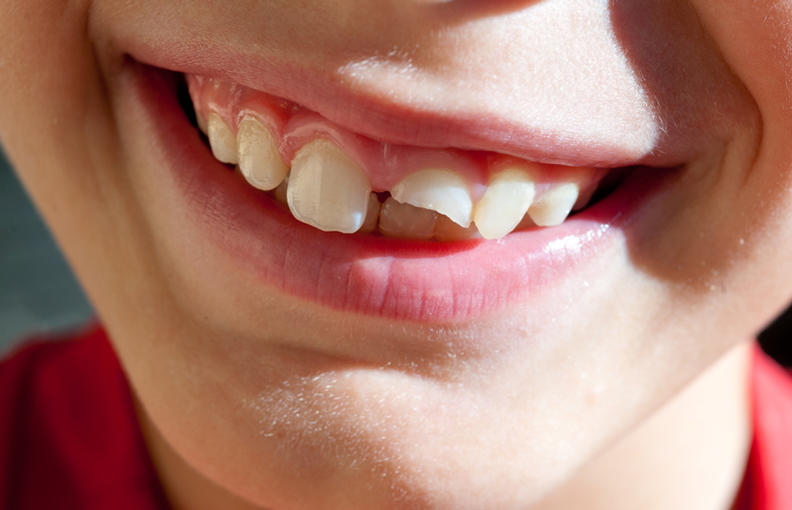
1. Chipped Tooth (Minor Fracture)
A small piece of enamel breaks off. The tooth may feel sharp. Usually not painful unless the chip is large enough to expose the inner layer (dentine).
2. Cracked Tooth
A crack runs through the tooth. May or may not be visible. Can cause pain when biting or sensitivity to temperature.
3. Broken Tooth with Nerve Exposure
A larger break that exposes the pink or red inner pulp of the tooth. This causes significant pain and requires urgent treatment.
4. Tooth Knocked Loose (Luxation)
The tooth is still in place but has been pushed in, pulled out partially, or moved sideways by the impact.
5. Tooth Knocked Out Completely (Avulsion)
The entire tooth comes out of the socket. This is the most urgent dental emergency in children — especially if it is a permanent tooth.
What To Do Immediately — Step by Step
Step 1: Stay Calm
Your child will mirror your reaction. Take a breath. Most dental injuries are treatable, especially when handled quickly.
Step 2: Check for Other Injuries
Before focusing on the tooth, make sure your child has no head injury, loss of consciousness, neck pain, or vomiting. If any of these are present, go to a hospital emergency first.
Step 3: Rinse the Mouth Gently
Use clean, lukewarm water to rinse your child’s mouth. Do not scrub or rub the injured area.
Step 4: Control Bleeding
Press a clean cloth or gauze gently against the area for 10 to 15 minutes. Minor bleeding is normal and usually stops on its own.
Step 5: Find the Broken Piece or Knocked-Out Tooth
If a piece of tooth has broken off, find it and bring it to the dentist — it may be reattached in some cases.
If a permanent tooth has been knocked out completely:
- Pick it up by the crown (white part), never by the root
- Do not scrub or wash the root
- Place it in a glass of cold milk or keep it in your child’s mouth between the cheek and gum
- Get to a pediatric dentist within 30 to 60 minutes — this is critical for re-implantation success
Step 6: Manage Pain
You can give your child the appropriate dose of children’s paracetamol (as per their age and weight) to manage pain while you travel to the dentist.
Step 7: Call Your Pediatric Dentist
Call immediately, explain what happened, and follow their guidance. Do not wait for the next available appointment — dental injuries are treated as emergencies.
Should I Go to a General Dentist or a Pediatric Dentist?
For a child’s dental injury, a pediatric dentist is always the better choice.
Here is why:
A pediatric dentist has specialized training in managing dental trauma in children. They understand how injuries affect growing teeth differently than adult teeth. They are also trained to manage anxious or scared children — which is almost every child after an injury.
At Verve Pediatric Dental Care, we are equipped to handle dental emergencies for children from infancy through 18 years. Dr. Birva Patel has additional training in dental traumatology — the field specifically focused on tooth injuries.
Treatment Options for a Broken Tooth in Children
The right treatment depends on which tooth is affected, how old your child is, and how severe the injury is.
For Baby (Milk) Teeth
Baby teeth are not simply “temporary.” They hold space for permanent teeth, help with speech, and affect your child’s confidence and nutrition.
Treatment options include:
Smoothing or bonding — for small chips, the sharp edge is smoothed or a tooth-coloured composite material is bonded to restore the shape.
Pulpotomy — if the nerve is affected but the root is still healthy, we remove the damaged nerve tissue from the top portion of the tooth and place a medicated filling to keep the tooth alive.
Pulpectomy — similar to a root canal for children, used when the entire pulp (nerve and blood supply) is infected or damaged.
Extraction — if the tooth cannot be saved, it may need to be removed. In some cases, a space maintainer is placed to prevent the surrounding teeth from drifting.
For Permanent Teeth
Permanent teeth require more aggressive effort to save.
Re-attachment — if the broken piece is intact and clean, it can sometimes be bonded back.
Composite bonding — a tooth-coloured resin is shaped and bonded to restore the tooth.
Crown — for larger fractures, a dental crown protects and restores the tooth.
Root canal treatment — if the nerve is exposed or the tooth is severely damaged, root canal treatment followed by a crown is the standard approach.
Re-implantation — for a knocked-out permanent tooth, we attempt to re-implant it if the tooth arrives within the golden window of 30–60 minutes.
Will My Child Feel Pain During Treatment?
This is the question most parents ask, and it is completely understandable.
At Verve, we use a combination of:
- Behaviour guidance techniques — to help children feel safe and cooperative
- Topical anaesthetic — to numb the gum before any injection
- Local anaesthesia — so your child feels no pain during the procedure
- Minimal sedation — for children who are very anxious or very young, we offer minimal sedation to help them stay calm and comfortable
Our goal is that your child leaves the clinic with a positive memory of the experience — not a fearful one.
How to Prevent Broken Teeth in Children
Prevention is always better than treatment. Here are practical tips:
Use a mouthguard during sports. Any contact sport — cricket, football, kabaddi, martial arts — puts teeth at risk. A custom-fitted mouthguard from your pediatric dentist offers the best protection.
Childproof your home. Bathroom tiles, sharp furniture corners, and slippery floors are the most common causes of dental injuries in young children. Use corner guards and non-slip mats.
Do not use teeth as tools. Children who bite on pencils, bottles, or packaging put their teeth under unnecessary stress.
Regular dental visits. Children who visit the dentist every 6 months have stronger, healthier teeth that are less prone to fracturing. We also identify weakened teeth early and can reinforce them with sealants or fluoride treatment.
No. Unlike permanent teeth, a knocked-out baby tooth should not be re-implanted, as it can damage the developing permanent tooth underneath. However, you should still visit a pediatric dentist to assess the socket and surrounding teeth, and to discuss whether a space maintainer is needed.
Yes. A broken tooth without pain can still have a crack extending toward the nerve, or sharp edges that can injure the tongue or cheek. A dentist needs to assess it properly.
Yes. Severe injuries to baby teeth — especially infections that are left untreated — can damage the permanent tooth developing underneath. This is why even baby tooth injuries deserve proper attention.
At Verve, we specialize in treating anxious children. Our clinic is designed to feel welcoming, and Dr. Birva Patel is trained in child behaviour management. We go at your child’s pace and use techniques that build trust rather than fear.
For a knocked-out permanent tooth — within 30 to 60 minutes. For any other dental injury — within 24 hours is ideal, but definitely within 48 hours.
About Dr. Birva Patel
Dr. Birva Patel completed her MDS in Pediatric and Preventive Dentistry from Ahmedabad Dental College. She is the founder of Verve Pediatric Dental Care and has successfully treated over 700 children across Ahmedabad.
She has specialized training in:
- Dental traumatology (tooth injuries)
- Treating fearful children under conscious sedation
- Preventive dentistry
- Soft tissue laser treatments in children
- Managing children with special needs
She serves families from Thaltej, SG Highway, Bodakdev, Vastrapur, Satellite, Prahlad Nagar, Sola, Naranpura, Gota, South Bopal, and nearby areas in Ahmedabad.
Book an Emergency Appointment at Verve
If your child has broken or injured a tooth, do not wait.
Call us now: +91 98251 00530
Verve Pediatric Dental Care 303-Silver Radiance-1, Near Zydus Hospital, Thaltej Ahmedabad – 380059, Gujarat
Clinic Hours: Monday to Saturday: 9:30 AM – 1:00 PM | 4:30 PM – 8:00 PM Sunday: By Appointment Only
This article is written by Dr. Birva Patel, MDS, Pediatric Dentist at Verve Pediatric Dental Care, Ahmedabad. It is intended for general informational purposes and does not replace professional dental consultation.
