Child Scared of the Dentist? How to Prepare Your Child for a Dental Visit

Child Specialist Dentist Near Me: How to Find the Right Dentist for Your Child
August 14, 2026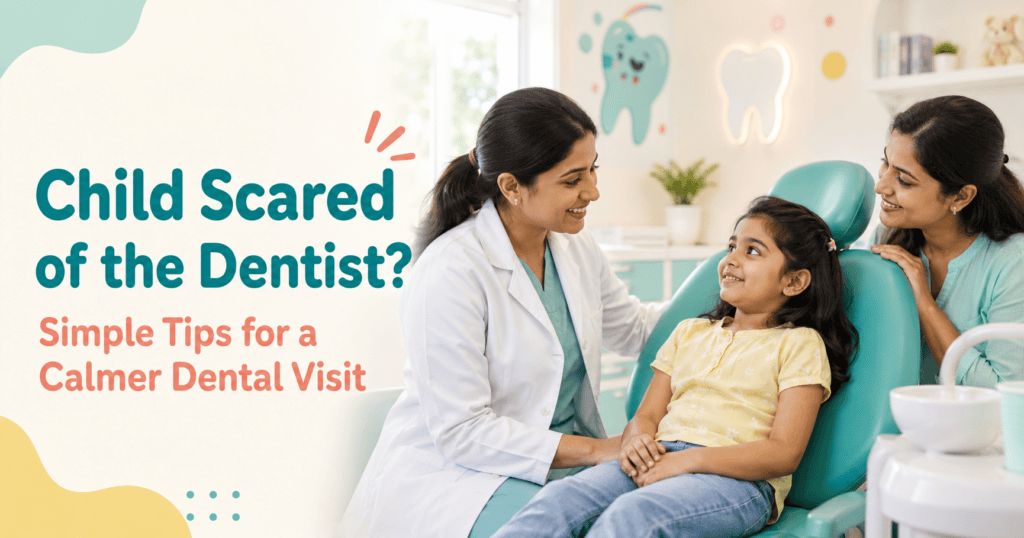
Is your child scared of the dentist? Crying before an appointment, refusing to sit in the dental chair, asking repeatedly whether treatment will hurt, or becoming nervous as soon as the dentist is mentioned can be challenging for both children and parents.
Dental fear in children is not unusual. A new environment, unfamiliar sounds, previous uncomfortable experiences, fear of pain, or simply not knowing what will happen can make a child anxious about visiting the dentist.
The good news is that the right preparation—and a dentist experienced in treating children—can make dental visits much more comfortable.
At Verve Pediatric Dental Care in Ahmedabad, Dr. Birva Patel focuses on child-friendly dentistry and behaviour guidance to help children gradually feel safe and confident during dental visits.
Why Is My Child Scared of the Dentist?
A child may become afraid of dental visits for several reasons.
Common triggers include:
- Fear of pain
- Previous negative dental or medical experiences
- Fear of injections or dental instruments
- Unfamiliar sounds, smells, or surroundings
- Separation anxiety
- Hearing frightening dental stories from friends or family
- Feeling that they have no control over what is happening
- Anxiety about meeting an unfamiliar dentist
- Sensitivity to touch, sound, light, or other sensations
Dental anxiety can appear differently in every child. Some children openly say they are scared, while others may cry, refuse to enter the clinic, become unusually quiet, complain of stomach discomfort, or resist opening their mouth.
The goal should not simply be to make a child “behave.” The better approach is to understand why the child is anxious and help them build confidence gradually.
How to Prepare a Scared Child for a Dental Visit
1. Talk About the Dentist Positively
The words parents use before an appointment can influence what a child expects.
Keep explanations simple and positive. You might tell your child:
“The dentist is going to count your teeth and help keep your smile healthy.”
Avoid introducing frightening concepts before they are necessary.
Words such as:
- injection
- needle
- drill
- pull
- hurt
- pain
can create anxiety even when the child was not worried beforehand.
A pediatric dentist can explain procedures using age-appropriate language once your child is comfortable.
2. Don’t Promise That “Nothing Will Hurt”
Parents naturally want to reassure their child, but saying:
“It definitely won’t hurt.”
can sometimes make the child think that pain is something they should be worried about.
Instead, try:
“The dentist will explain everything and help you feel comfortable.”
This gives reassurance without making promises about sensations your child may experience.
3. Avoid Sharing Your Own Dental Fears
If you had a difficult dental experience growing up, avoid discussing it in detail before your child’s appointment.
Children often notice the emotions and language adults use. Statements such as:
“I hate going to the dentist too.”
or
“Don’t worry, injections aren’t that bad.”
may unintentionally increase their anxiety.
Try to present dental visits as a normal part of staying healthy.
4. Use Pretend Play at Home
For younger children, role-playing can make the dental experience feel more familiar.
You can take turns pretending to be the dentist and patient.
Try:
- Counting your child’s teeth
- Asking them to open their mouth
- Using a toothbrush to “check” their teeth
- Letting your child examine a doll or stuffed toy
- Practicing sitting still while you count to ten
Keep the activity playful rather than turning it into a detailed simulation of dental treatment.
The aim is familiarity, not explaining every instrument your child might see.
5. Read Positive Books or Show Child-Friendly Dental Content
Books and age-appropriate videos about visiting the dentist can help children understand what to expect.
Positive pre-visit imagery and familiarization are among the approaches recognized within pediatric dental behavior guidance.
Choose material that presents dental care calmly and positively rather than content that focuses heavily on procedures.
6. Tell the Dentist About Your Child’s Anxiety Before the Appointment
If your child has previously had a difficult dental experience or has significant anxiety, let the dental clinic know in advance.
Tell the dentist about:
- Previous negative dental experiences
- Specific fears
- Sensory sensitivities
- Medical conditions
- Developmental or behavioural needs
- Difficulty tolerating certain sounds or sensations
- What usually helps your child calm down
This information allows the pediatric dentist to plan the visit according to your child’s individual needs.
7. Give Your Child Time to Become Comfortable
A frightened child may not be ready for extensive dental treatment immediately.
Depending on the child’s age, dental condition, anxiety level, and urgency of treatment, the dentist may begin by helping the child become familiar with the clinic, dental chair, mirror, or other equipment.
One commonly used pediatric technique is Tell-Show-Do:
Tell: Explain what will happen using child-friendly words.
Show: Demonstrate the instrument or action in a non-threatening way.
Do: Carry out the procedure once the child understands what to expect.
Tell-show-do is one of several established behavior-guidance techniques described by the American Academy of Pediatric Dentistry.
8. Praise Small Achievements
A child does not have to complete complicated treatment for the visit to be considered successful.
Praise them for small steps such as:
- Entering the clinic calmly
- Sitting in the dental chair
- Opening their mouth
- Allowing the dentist to count their teeth
- Completing an X-ray
- Cooperating during part of a procedure
Positive reinforcement and descriptive praise are also recognised behavior-guidance approaches in pediatric dentistry.
Instead of saying only “good job,” be specific:
“You did a great job keeping your mouth open while the dentist checked your teeth.”
That tells the child exactly what they did well.
9. Keep Regular Dental Visits Instead of Waiting for Pain
One of the most difficult times to introduce a frightened child to dentistry is when they already have severe tooth pain.
When the first experience involves an emergency, swelling, infection, or extensive treatment, establishing trust can become more challenging.
Routine preventive visits allow children to become familiar with the dentist when they are comfortable and not experiencing a dental emergency.
The American Academy of Pediatric Dentistry recommends establishing a dental home by the child’s first birthday, with visit frequency determined according to the child’s individual oral-health needs.
What Should Parents Avoid Before a Dental Appointment?
When your child is already anxious, try not to:
- Threaten them with a dental visit
- Use the dentist as punishment
- Describe your own painful dental experiences
- repeatedly ask whether they are scared
- Promise rewards only if they “don’t cry”
- Explain complicated procedures yourself
- Tell them treatment “won’t hurt at all”
- Cancel every appointment because the child becomes nervous
The objective is not to pressure the child. It is to create a calm, predictable experience and allow trust to develop.
How Can a Pediatric Dentist Help a Fearful Child?
A pediatric dentist is trained specifically to provide dental care for infants, children, and adolescents.
Managing a nervous child may involve more than completing the dental procedure itself. The dentist must consider the child’s:
- Age
- Emotional development
- Previous experiences
- Communication ability
- Level of anxiety
- Treatment required
- Medical and developmental history
Depending on the child, behavior-guidance techniques may include communication, tell-show-do, distraction, positive reinforcement, desensitization, and other individualized approaches.
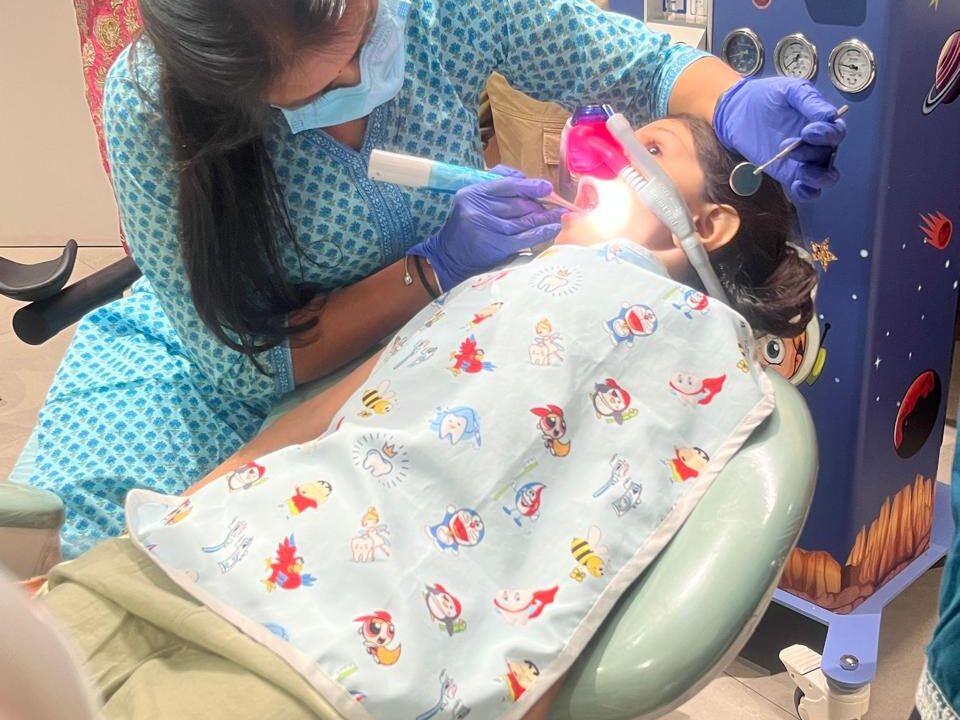
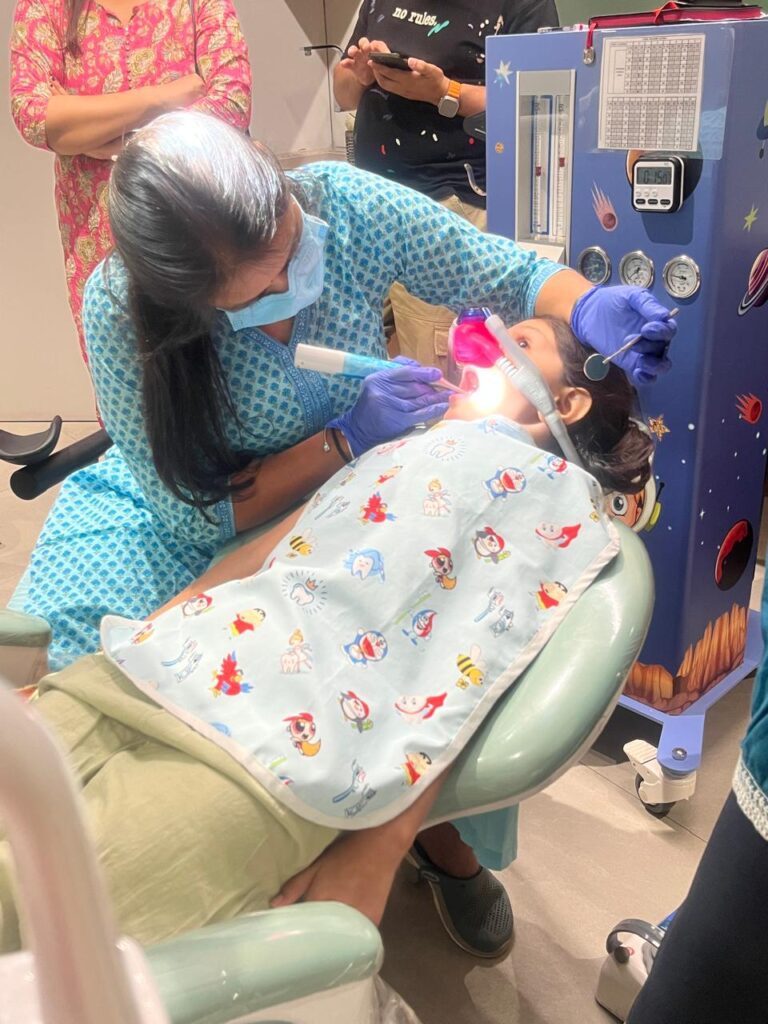
For some children with significant anxiety or particular treatment needs, the dentist may also discuss whether an appropriate form of minimal or conscious sedation should be considered after assessment.
Sedation is not necessary for every anxious child. The appropriate approach depends on the child’s individual needs and the treatment planned.
Child-Friendly Pediatric Dental Care in Ahmedabad
If your child is scared of dental treatment, choosing a dental clinic designed around children’s needs can make an important difference.
Verve Pediatric Dental Care is located in Thaltej, Ahmedabad, near Zydus Hospital and SG Highway.
The clinic is founded by Dr. Birva Patel, MDS in Pediatric and Preventive Dentistry. Dr. Patel completed her undergraduate dental education at the College of Dental Sciences, Davangere, and her MDS in Pediatric and Preventive Dentistry from Ahmedabad Dental College.
She has additional training in treating fearful children using conscious sedation and takes a special interest in:
- Preventive pediatric dentistry
- Dental traumatology
- Behaviour guidance for children
- Dental care for children with disabilities
- Soft-tissue laser applications in children
Verve Pediatric Dental Care is dedicated to the oral-health needs of children from infancy through adolescence.
The clinic reports more than 6 years of pediatric dental experience, 700+ children treated, and a 99% parent satisfaction rate.
Parents looking for specialised children’s dental care can learn more about our Pediatric Dentist in Ahmedabad services.
When Should You Seek Dental Care Even If Your Child Is Scared?
Fear should not lead to delaying care when a child has signs of a dental problem.
Arrange a dental evaluation if your child has:
- Persistent toothache
- Pain while eating or chewing
- Facial or gum swelling
- Broken or injured teeth
- Visible cavities
- Bleeding or swollen gums
- Sensitivity that continues
- Dental infection
- Difficulty sleeping because of tooth pain
- Trauma to a baby or permanent tooth
Tell the dental team about your child’s anxiety when booking so that the visit can be planned appropriately.
Helping Your Child Build Positive Dental Experiences
Children can develop their feelings about dental care from their earliest experiences.
A calm approach at home, regular preventive appointments, age-appropriate explanations, and a pediatric dental team experienced in behaviour guidance can help make future visits easier.
If your child is scared of the dentist in Ahmedabad, you do not need to wait until dental pain forces an emergency visit.
At Verve Pediatric Dental Care, the focus is on understanding each child’s comfort level and gradually building trust while providing the dental care they need.
Book a Pediatric Dental Appointment in Ahmedabad
Verve Pediatric Dental Care
303, Silver Radiance-1
Near Zydus Hospital, Thaltej
Ahmedabad, Gujarat
Call: +91 98251 00530
Email: care@vervedental.in
Book an appointment with a Pediatric Dentist in Ahmedabad
Frequently Asked Questions
Why is my child suddenly scared of the dentist?
A child may become scared because of a previous uncomfortable experience, fear of pain, unfamiliar dental sounds or instruments, stories they have heard from others, or uncertainty about what will happen. Identifying the specific fear can help the dentist choose an appropriate behaviour-guidance approach.
What should I tell my child before going to the dentist?
Keep the explanation simple and positive. Tell your child that the dentist will check their teeth and help keep their smile healthy. Avoid detailed descriptions of needles, drilling, pain, or treatment unless the dental team recommends otherwise.
Should I force my child to sit in the dental chair?
A frightened child usually benefits from an approach based on communication, trust, and age-appropriate behaviour guidance rather than unnecessary pressure. The dentist should assess the child’s anxiety, treatment needs, and ability to cooperate before determining the appropriate approach.
What if my child cries at the dentist?
Crying does not automatically mean that a dental appointment has failed. Children may cry because they are frightened, overwhelmed, tired, or unfamiliar with the situation. A pediatric dentist can assess the reason for the behaviour and adapt the approach accordingly.
Can a pediatric dentist help a child with dental anxiety?
Yes. Pediatric dentists use behaviour-guidance techniques designed for children’s developmental and emotional needs. Approaches can include tell-show-do, positive reinforcement, distraction, communication guidance, and gradual desensitization.
Does every scared child need sedation for dental treatment?
No. Many children can be treated using non-pharmacological behaviour-guidance techniques. Sedation may be considered for selected children depending on their anxiety, age, ability to cooperate, medical history, and the treatment required.
Where can I take a child who is scared of the dentist in Ahmedabad?
Verve Pediatric Dental Care in Thaltej, Ahmedabad provides child-focused dental care under Dr. Birva Patel, MDS Pediatric and Preventive Dentistry. The clinic is located near Zydus Hospital and SG Highway and provides behaviour-guided pediatric dental care for infants, children, and adolescents.
How do I prepare a child who is scared of the dentist?
Use positive language, avoid discussing pain or injections, practise a pretend dental visit at home and tell the pediatric dentist about your child’s anxiety beforehand.
Should I force my child to sit in the dental chair?
Forcing a frightened child may increase their anxiety. A pediatric dentist may use gradual familiarisation, tell-show-do and positive reinforcement to build trust.
Why does my child cry at the dentist?
Children may cry because of unfamiliar surroundings, fear of pain, sensory sensitivity, previous experiences or difficulty understanding what will happen.
Can a pediatric dentist help an extremely anxious child?
Yes. Pediatric dentists use age-appropriate communication and behaviour-guidance methods. Depending on the child and required treatment, sedation options may also be discussed after an individual assessment.
Where can I find a dentist for a scared child in Ahmedabad?
Verve Pediatric Dental Care in Thaltej, Ahmedabad, provides child-focused dental care and behaviour guidance under Dr. Birva Patel, MDS in Pediatric and Preventive Dentistry.