Pediatric Dental Sedation in Ahmedabad: Is Laughing Gas Safe for Children?

Root Canal or Extraction for a Baby Tooth: How Does the Dentist Decide?
October 14, 2026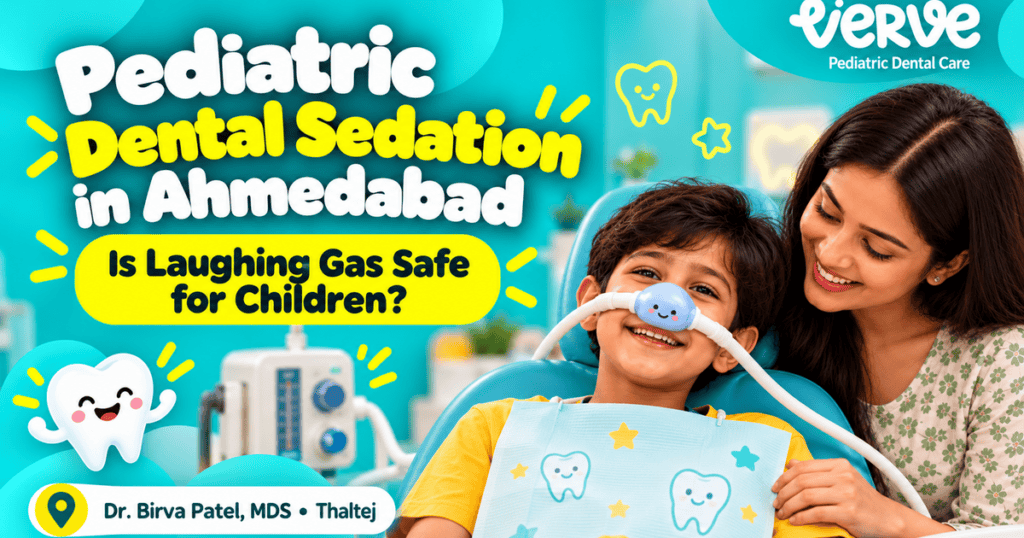
Dental anxiety can make even a routine appointment difficult for some children. Unfamiliar sounds, fear of discomfort, previous experiences or difficulty sitting still may prevent a child from receiving necessary treatment.
Pediatric dental sedation may help selected children feel calmer during dental treatment. With minimal nitrous oxide sedation—commonly called laughing gas or happy gas—the child normally remains awake, breathes independently and can respond to the dentist. It is recommended only after reviewing the child’s health, anxiety and treatment needs.
At Verve Pediatric Dental Care in Thaltej, Ahmedabad, Dr. Birva Patel, MDS, uses behaviour guidance first and considers minimal sedation when it is appropriate for the individual child.
What Is Pediatric Dental Sedation?
Pediatric dental sedation includes carefully controlled techniques used to reduce fear and help children cope with dental procedures.
Sedation does not always mean putting a child to sleep. Minimal sedation using nitrous oxide and oxygen allows the child to remain conscious and communicate with the dental team.
The objective is to:
- Reduce dental fear and anxiety
- Help the child remain comfortable
- Improve communication and cooperation
- Control an overactive gag reflex
- Support completion of necessary treatment
- Create a more positive dental experience
The American Academy of Pediatric Dentistry states that nitrous oxide–oxygen inhalation can be a safe and effective method of managing dental anxiety when used for an appropriately selected child.
What Is Laughing Gas for Children?
Laughing gas is a controlled combination of nitrous oxide and oxygen delivered through a small mask placed over the child’s nose.
The child breathes normally through the mask. Within a short time, they may feel relaxed, warm, light or slightly tingly. The child generally remains awake and can talk to the dentist throughout the procedure.
The effect can be adjusted during treatment. Once treatment is complete, the nitrous oxide is stopped, and oxygen is provided according to the clinical protocol. Recovery is generally rapid, but the child is observed before leaving the clinic.
Despite its name, laughing gas does not necessarily make every child laugh. Its main purpose is to reduce anxiety and make treatment easier to tolerate.
Which Children May Benefit From Dental Sedation?
A pediatric dentist may consider minimal sedation when a child:
- Is very nervous or fearful
- Has experienced a difficult dental or medical visit
- Cannot cooperate despite behaviour guidance
- Has a strong or sensitive gag reflex
- Finds dental sounds or sensations overwhelming
- Requires a longer dental procedure
- Has developmental, behavioural or communication needs
- Needs timely treatment that cannot be delayed safely
Not every anxious child needs sedation. Many children respond well to tell-show-do, distraction, positive reinforcement, short introductory visits and gradual familiarisation.
Sedation should be selected according to the child—not simply because a parent requests it or because a particular treatment is planned.
Is Laughing Gas Safe for Children?
No healthcare procedure is completely risk-free. However, nitrous oxide and oxygen are widely used in pediatric dentistry and may be considered safe when delivered by trained professionals with appropriate equipment, monitoring and patient selection.
Before recommending pediatric dental sedation in Ahmedabad, the dentist should review:
- The child’s complete medical history
- Current medicines and allergies
- Previous sedation or anaesthesia experiences
- Recent respiratory illness
- Nasal or sinus problems
- The proposed dental treatment
- The child’s anxiety and ability to cooperate
- Their ability to breathe comfortably through the nose
Parents must provide accurate information about medical conditions and medications. This helps the dentist decide whether laughing gas is suitable or whether another approach should be considered.
When May Laughing Gas Not Be Suitable?
Nitrous oxide is delivered through the nose. It may therefore be unsuitable or ineffective when a child has:
- A blocked nose
- A cold or persistent cough
- Significant sinus congestion
- An active upper-respiratory infection
- Certain recent ear, nose or throat procedures
- Difficulty accepting or breathing through the nasal mask
- A medical condition requiring additional assessment
Parents should contact the clinic if their child becomes unwell before the appointment. The dentist can then decide whether treatment should proceed or be rescheduled.
What Happens During the Appointment?
The appointment begins with an assessment of the child’s dental condition, anxiety and medical history. The dentist explains the proposed approach, alternatives and relevant precautions before obtaining parental consent.
A small nasal mask is then positioned comfortably. Oxygen and nitrous oxide are introduced gradually while the dentist observes the child’s response.
The child usually remains awake and responsive. Behaviour-guidance methods continue throughout treatment because sedation does not replace communication, reassurance and trust.
After treatment, the nitrous oxide is stopped. The child receives oxygen as clinically appropriate and remains under observation until the dentist confirms that recovery is satisfactory.
Parents should follow the clinic’s instructions about eating, medicines and preparation. Do not follow a fasting rule found online without confirming it with the treating dentist.
Does Laughing Gas Make Dental Treatment Painless?
Laughing gas primarily reduces anxiety. It may change how a child experiences discomfort, but it does not always replace local anaesthesia.
If a tooth needs to be numbed, the dentist may still use local anaesthesia. Parents should therefore avoid promising that the child will feel nothing.
A more helpful explanation is:
“The dentist will explain everything and help you feel comfortable.”
This provides reassurance without creating unrealistic expectations.
Are There Any Side Effects?
Most appropriately selected children tolerate minimal nitrous oxide sedation well. Temporary side effects can include:
- Nausea or vomiting
- Dizziness
- Headache
- Feeling unusually warm
- Temporary discomfort from the nasal mask
Following the dentist’s preparation instructions can help reduce avoidable problems. Parents should report any unusual symptoms or previous reactions before treatment.
Can Children With Autism or ADHD Receive Sedation?
Some children with autism, ADHD or sensory sensitivities may benefit from an individualised dental plan, but sedation is not automatically required.
Parents should tell the clinic about:
- Sensitivity to sounds, lights, smells or touch
- Communication preferences
- Behavioural or developmental needs
- Current medicines
- Previous difficult appointments
- Strategies that normally help the child remain calm
The pediatric dentist may use visual preparation, gradual familiarisation, sensory adjustments and behaviour guidance. Minimal sedation may be discussed only after evaluating the child and required treatment.
Parents can also read Verve’s guide for a dentist for an autistic child in Ahmedabad.
Pediatric Dental Sedation in Ahmedabad at Verve
Verve Pediatric Dental Care provides behaviour-guided treatment and minimal sedation for suitable children at its Thaltej clinic.
Dr. Birva Patel, MDS, assesses the child’s health, treatment requirements and ability to cooperate before recommending an approach. Some children may only need reassurance and behaviour guidance, while others may benefit from laughing gas.
If you are searching for a laughing gas dentist for kids in Ahmedabad, begin with a pediatric dental assessment rather than assuming sedation will be required.
Book an appointment with a pediatric dentist in Ahmedabad.
No. During minimal nitrous oxide sedation, the child generally remains awake, responsive and able to communicate.
There is no single suitable age for every child. The dentist considers health, emotional development, ability to accept the nasal mask and treatment requirements.
Its effects generally reduce quickly after administration stops. The dentist provides oxygen as appropriate and observes the child before discharge.
Not always. It helps control anxiety, but local anaesthesia may still be required to numb the treatment area.
A blocked nose or respiratory infection can prevent effective nasal breathing. Contact the clinic before attending.
Where is pediatric dental sedation available in Ahmedabad?
Verve Pediatric Dental Care provides minimal sedation for suitable children under Dr. Birva Patel, MDS, at 303, Silver Radiance-1, near Zydus Hospital, Thaltej, Ahmedabad – 380059.
This article provides general educational information. Whether sedation is appropriate can only be determined after reviewing the individual child’s medical history, dental needs and ability to cooperate.
Suggested author: Dr. Birva Patel, MDS – Pediatric and Preventive Dentistry